Figuring out the right internet speed for a family can feel overwhelming. Internet service providers want you to believe that more is always better. They heavily market gigabit internet plans. The reality is quite different. Most families of four end up paying for a massive amount of bandwidth they simply never use.
Before we dive into the numbers, it is important to understand what internet speed actually means. Your connection speed is measured in Megabits per second or Mbps. This tells you how much data can flow into your house at any exact moment. It is very different from data volume which is measured in Gigabytes. You can learn more about this core difference in our Mbps vs GB guide.
Think of your internet connection like a water pipe coming into your home. A larger pipe lets you run the shower, the dishwasher, and the garden hose all at the same time without losing water pressure. A higher Mbps plan works the same way for your devices. It ensures everyone can stream, game, and work simultaneously.
The Short Answer: 300 to 500 Mbps Is the Sweet Spot
For a typical modern family of four, an internet speed between 300 Mbps and 500 Mbps is the absolute sweet spot. This range offers more than enough bandwidth to handle heavy evening internet usage. It prevents bottlenecks when everyone comes home and connects their devices.
At 300 Mbps, four people can stream 4K video simultaneously. They can browse social media and run smart home devices without any noticeable lag. If you bump up to 500 Mbps, you gain an excellent buffer. This extra speed helps tremendously when someone decides to download a massive video game or a large software update.
Internet service providers often try to upsell families on gigabit connections. Gigabit means 1000 Mbps. It sounds incredibly fast and impressive. However, very few households actually push past 300 Mbps of simultaneous usage. You can check your own historical usage trends by following our guide on how to check data usage on your router.
Breaking Down Your Family's Bandwidth Needs
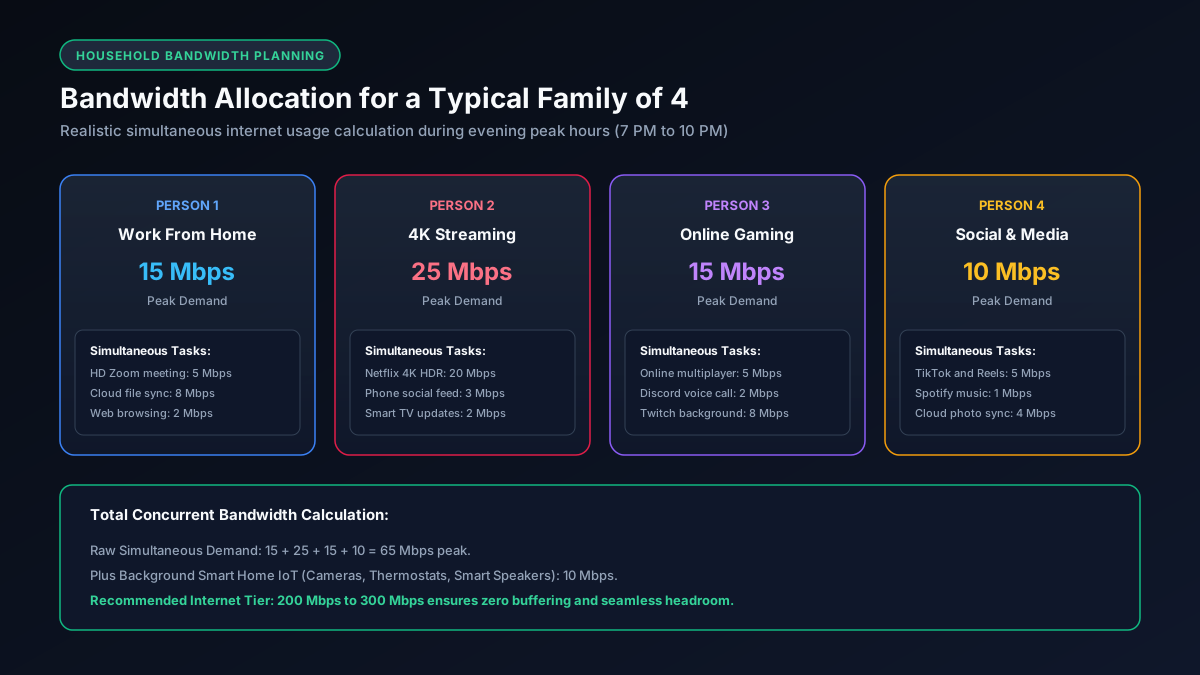
To understand why 300 to 500 Mbps is ideal, we need to look at specific activities. Every app and service requires a different amount of bandwidth. Let us explore what happens when everyone in the house is online at the exact same time.
1. Video Streaming in 4K (15 to 25 Mbps)
Streaming video is usually the biggest bandwidth hog in any home. Standard high definition streaming only requires about 5 Mbps. However, 4K resolution uses significantly more data. Services like Netflix and Disney Plus typically require 15 to 25 Mbps per 4K stream. If your family has three televisions playing 4K movies simultaneously, you are using about 75 Mbps total. You can see how this affects your monthly data caps in our Netflix data usage guide.
2. Online Gaming (3 to 5 Mbps)
Many parents assume that online gaming requires incredibly fast internet. This is a common misconception. Playing a competitive multiplayer game uses very little bandwidth. It typically maxes out around 3 to 5 Mbps. Stability and latency are far more important than raw speed. You can dive deeper into this topic in our dedicated online gaming data usage breakdown.
The only time gaming requires massive bandwidth is during a download. Modern games often exceed 100 Gigabytes. A faster Mbps plan will reduce how long it takes to install the game. You can calculate exact wait times using our 100GB game download time calculator.
3. Video Calls and Remote Work (5 to 10 Mbps)
Working from home relies heavily on video conferencing apps like Zoom or Microsoft Teams. These applications are highly optimized. A high quality video call usually requires just 5 to 10 Mbps of bandwidth. However, video calls are a two way street. They demand a solid upload speed just as much as a download speed. Read more in our Zoom data usage analysis.
4. Smart Home Devices (1 to 2 Mbps)
Smart thermostats, light bulbs, and voice assistants use a negligible amount of bandwidth. They send tiny packets of data intermittently. Security cameras are the only exception. A 4K security camera uploading footage to the cloud might use 3 to 4 Mbps continuously. This primarily impacts your upload speed.
When Do You Actually Need Gigabit Internet?
We just established that 500 Mbps is plenty for most households. So who actually benefits from a gigabit or 1000 Mbps plan? You should consider upgrading if you meet very specific criteria.
First, consider gigabit if multiple people in the house frequently download enormous files. This includes video editors syncing 4K footage to cloud servers. It also includes gamers who regularly download massive titles and hate waiting. Second, consider gigabit if you run a robust home server. Tech enthusiasts often need extreme speeds to access their local network remotely. You can explore home server options in our best NAS for home backup guide.
Finally, some internet providers only offer decent upload speeds on their gigabit tier. Cable internet is notoriously asymmetrical. A 500 Mbps plan might only offer 20 Mbps of upload speed. Upgrading to gigabit might be the only way to get 50 Mbps of upload speed. If you constantly upload large files, this forced upgrade might be necessary.
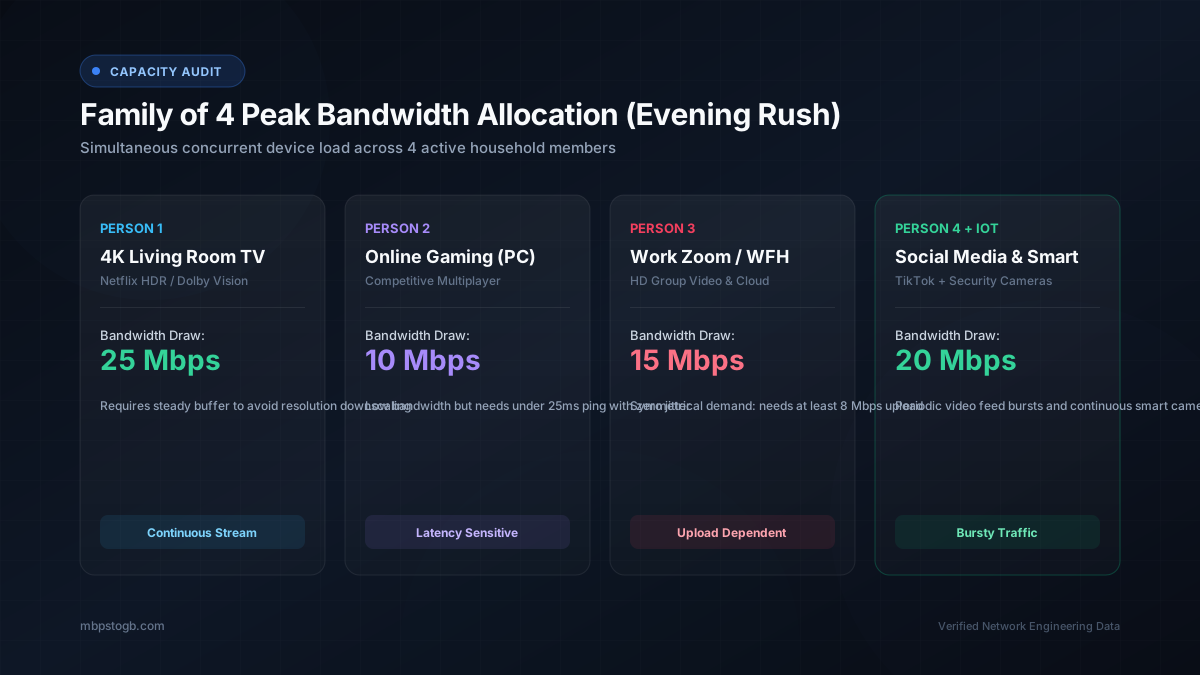
Do Not Forget About Wi-Fi Bottlenecks
Paying for a fast internet plan is only half the battle. Your home networking equipment must be capable of delivering that speed to your devices. A terrible router will make a 500 Mbps plan feel like a 20 Mbps plan.
Many ISP provided routers have terrible range. They struggle to penetrate walls and floors. If your family complains about slow internet in distant bedrooms, you likely have a Wi-Fi coverage issue. Upgrading your internet plan will not fix this. Instead, you need a modern mesh Wi-Fi system. A mesh system places multiple access points around your home to blanket every room in a strong signal.
For stationary devices like gaming consoles and smart TVs, always use an Ethernet cable. A wired connection guarantees maximum speed and eliminates wireless interference. If you need help choosing the right wire, check out our guide on the best cable for 1Gb Ethernet.
Understanding the Difference Between Speed and Monthly Data
It is vital to distinguish between your internet speed and your monthly data allowance. Your speed dictates how fast things load at any given second. Your data allowance dictates the total volume of information you can download in a month. These are completely separate metrics.
A typical family of four consumes between 800 GB and 1.5 TB of total data every month. This usage comes from constant streaming, gaming, and browsing over thirty days. If your internet service provider enforces a data cap, you need to monitor this closely. You can read our detailed breakdown on average family data usage per month to see how your household compares.
Conclusion
Do not let flashy marketing campaigns trick you into buying unnecessary internet speeds. A reliable 300 to 500 Mbps connection provides abundant bandwidth for a family of four. It allows everyone to stream, play, and work simultaneously without frustrating interruptions.
Invest your money in a high quality mesh Wi-Fi system instead of an expensive gigabit plan. A strong wireless signal will do far more to improve your daily internet experience than a massive speed upgrade. If you are ever curious about how long a specific download will take on your current plan, use our free Mbps to GB download calculator.
Frequently Asked Questions
Do we really need Gigabit internet for four people?
No, gigabit internet is usually overkill for a family of four. A typical family uses between 100 Mbps and 300 Mbps at any given moment even during peak hours. You only need gigabit if multiple people download massive files daily.
How many Mbps do I need to stream 4K on multiple TVs?
Netflix and YouTube recommend about 15 to 25 Mbps per 4K stream. If four people watch 4K content simultaneously, you only need about 100 Mbps dedicated to streaming.
Is 500 Mbps fast enough for a family?
Yes, 500 Mbps is plenty for a typical family of four. It provides enough bandwidth for simultaneous 4K video streaming, online gaming, and video conferencing without any buffering or lag.
Why does my internet feel slow even with a high Mbps plan?
Your internet plan might be fast but your router could be outdated. Wi-Fi dead zones, interference, or connecting too many devices to an old router can cause slowdowns. Upgrading to a mesh Wi-Fi system often solves this issue.
Are upload speeds important for families?
Yes, upload speeds are crucial if parents work from home or kids attend online classes. Video calls, cloud backups, and sending large files rely entirely on your upload speed. We recommend at least 20 Mbps of upload bandwidth.
More Helpful Resources
- Unlimited vs Capped Data Plans, understand how your provider measures your usage.
- What Uses the Most Data at Home?, identify the hidden bandwidth hogs on your network.
- How to Reduce Streaming Data Usage, optimize your streaming habits to avoid overage fees.
- Mbps to GB Calculator, instantly translate connection speeds into total data volumes.