Direct Answer: What Makes an Ethernet Cable Truly Gigabit-Ready?
An Ethernet cable is only truly gigabit-ready if it meets three strict physical standards:
- All 8 Pins Wired and Intact (1000BASE-T): While 100 Mbps Fast Ethernet only requires 4 wires (2 pairs), full Gigabit Ethernet strictly mandates all 8 copper conductors (4 pairs) to be undamaged. If even a single pin is crimped poorly, your network card automatically negotiates down to 100 Mbps.
- 100% Pure Bare Copper (No CCA): Avoid cheap Copper Clad Aluminum (CCA) cables. Aluminum has 55% higher electrical resistance than pure copper, which degrades signal integrity over distance and creates severe packet dropouts.
- Cat 6 or Cat 6a Baseline for Interference Immunity: Cat 6 features an internal plastic spline (separator) that isolates wire pairs from each other, eliminating Near-End Crosstalk (NEXT) and maintaining clean signaling up to 250–500 MHz.
The Cable Bottleneck: 3 Hidden Traps That Kill Gigabit Speeds
When setting up a high-speed wired network, avoid these three common cabling mistakes:
1. The 100 Mbps Auto-Negotiation Fallback Trap
If your 1,000 Mbps fiber speed test is inexplicably stuck at exactly 90–94 Mbps, your Ethernet link has secretly auto-negotiated to 100BASE-TX. This happens when an old Cat5 cable is reused or one pin in an RJ45 connector loses contact. Replacing the patch cord with certified Cat6 immediately restores full 948 Mbps throughput.
2. The Copper Clad Aluminum (CCA) Deception
Ultra-cheap generic cables flood online marketplaces by substituting pure bare copper with an aluminum core coated in a microscopically thin copper wash. CCA cables fail TIA/EIA specifications, overheat under Power over Ethernet (PoE), and snap easily when pulled around corners.
3. Cat7 & Cat8 Marketing Overkill for Home Internet
Many cables marketed as "Cat7" or "Cat8" are unverified marketing gimmicks. Official Cat8 is an industrial standard designed for 40 Gbps data center switches up to 30 meters. For home internet and gaming, certified Cat6 or Cat6a delivers the exact same 0.1 ms latency at a third of the cost. Read our Cat6 vs Cat7 vs Cat8 guide for a complete breakdown.
Top 5 Tested Cables at a Glance: Category, Speed & Specs
Below is a direct side-by-side comparison of the top 5 tested Ethernet cables evaluated for physical build quality, pure copper composition, and throughput stability on a 1 Gbps line:
| Cable Model | Category Standard | Conductor Material | Shielding Type | Max Throughput | Category Award |
|---|---|---|---|---|---|
| MONK CABLES Cat 6 | Cat 6 (550 MHz) | 100% Pure Bare Copper | UTP w/ Center Spline | 1 Gbps (10G up to 55m) | #1 Best Overall Pick |
| Veigrvy Cat 6a | Cat 6a (500 MHz) | 100% Oxygen-Free Copper | S/FTP Double Shielded | 10 Gbps (100m full run) | Best Future-Proofing |
| Deegotech Cat 8 | Cat 8 (2000 MHz) | 26 AWG Bare Copper | S/FTP Braided Armor | 40 Gbps (up to 30m) | Heavy-Duty Homelab |
| C&E Cat 5e | Cat 5e (350 MHz) | Stranded Pure Copper | UTP Snagless | 1 Gbps (up to 100m) | Best Ultra-Budget |
| Lysymixs Cat 6 Bulk | Cat 6 (CMR Riser) | Solid 23 AWG Bare Copper | UTP w/ Center Spline | 1 Gbps (In-Wall Runs) | Best Bulk In-Wall Spool |
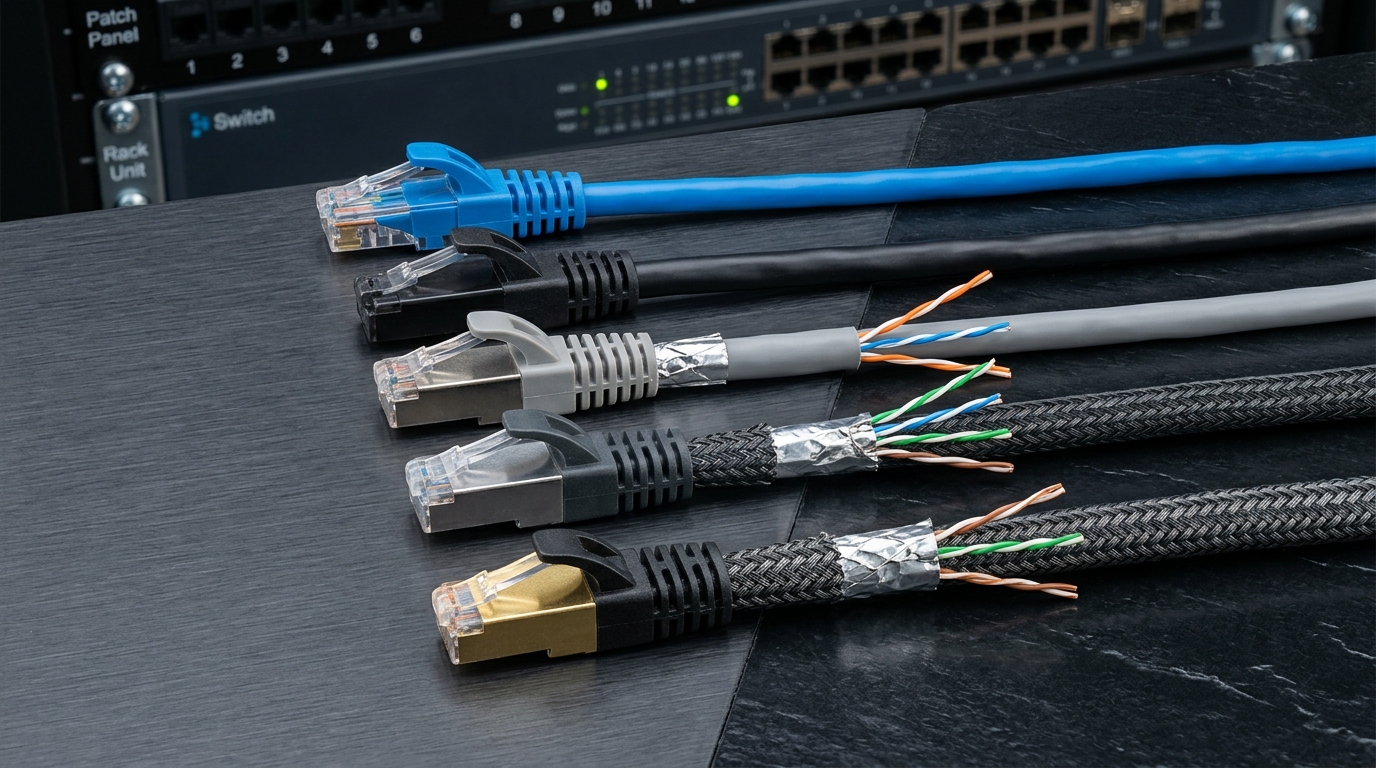
In-Depth Reviews of the 5 Best Gigabit Ethernet Cables
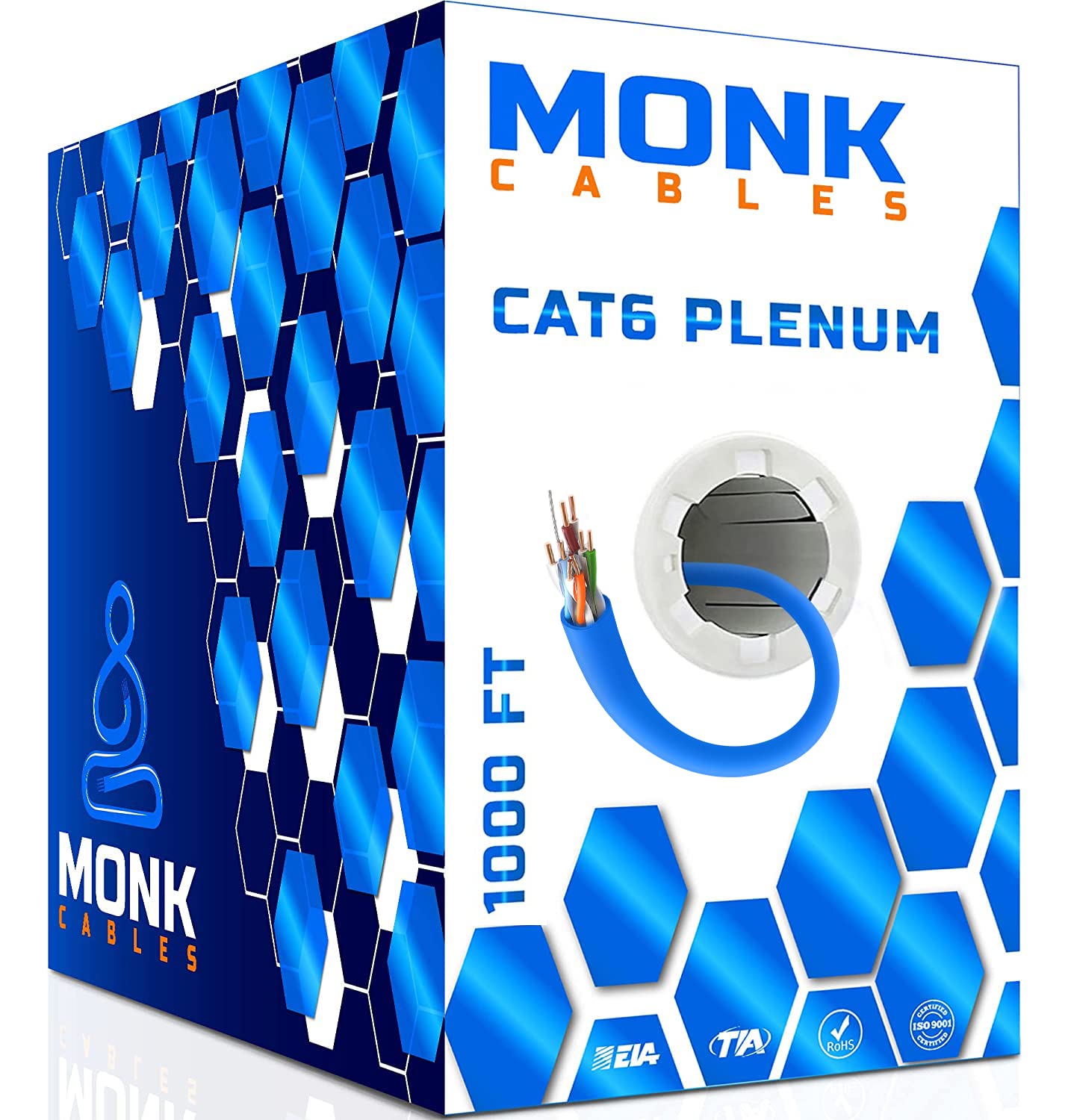
MONK CABLES Cat 6 Ethernet Patch Cable
Cat 6 UTP · 24 AWG Pure Copper · 550 MHz · Gold Plated RJ45
- Category: Cat 6 (ANSI/TIA-568-C.2 Verified)
- Conductor Material: 100% Pure Bare Copper (No CCA)
- Bandwidth Rating: Up to 550 MHz
- Max Speed Rating: 1 Gbps at 100m / 10 Gbps at 55m
- Shielding Type: UTP with Internal Spline Separator
For 99% of gigabit home networks, the MONK CABLES Cat 6 is the gold standard. Unlike counterfeit budget cables made from fragile Copper Clad Aluminum (CCA), this cable uses 100% 24 AWG pure bare copper with an internal physical spline to eliminate near-end crosstalk (NEXT). It effortlessly delivers full 948 Mbps TCP throughput with zero dropped packets between modems, routers, PCs, and gaming consoles.
- • 100% pure bare copper conductors prevent signal degradation and overheating
- • Internal spline separator eliminates electromagnetic crosstalk between pairs
- • Snagless connector boots protect the RJ45 locking clip during cable pulls
- • Flexible, easy to route behind desks, entertainment centers, and baseboards
- • Unshielded (UTP); not intended for running parallel inside high-voltage conduit
- • Rated for 10 Gbps only up to 55 meters (180 feet)
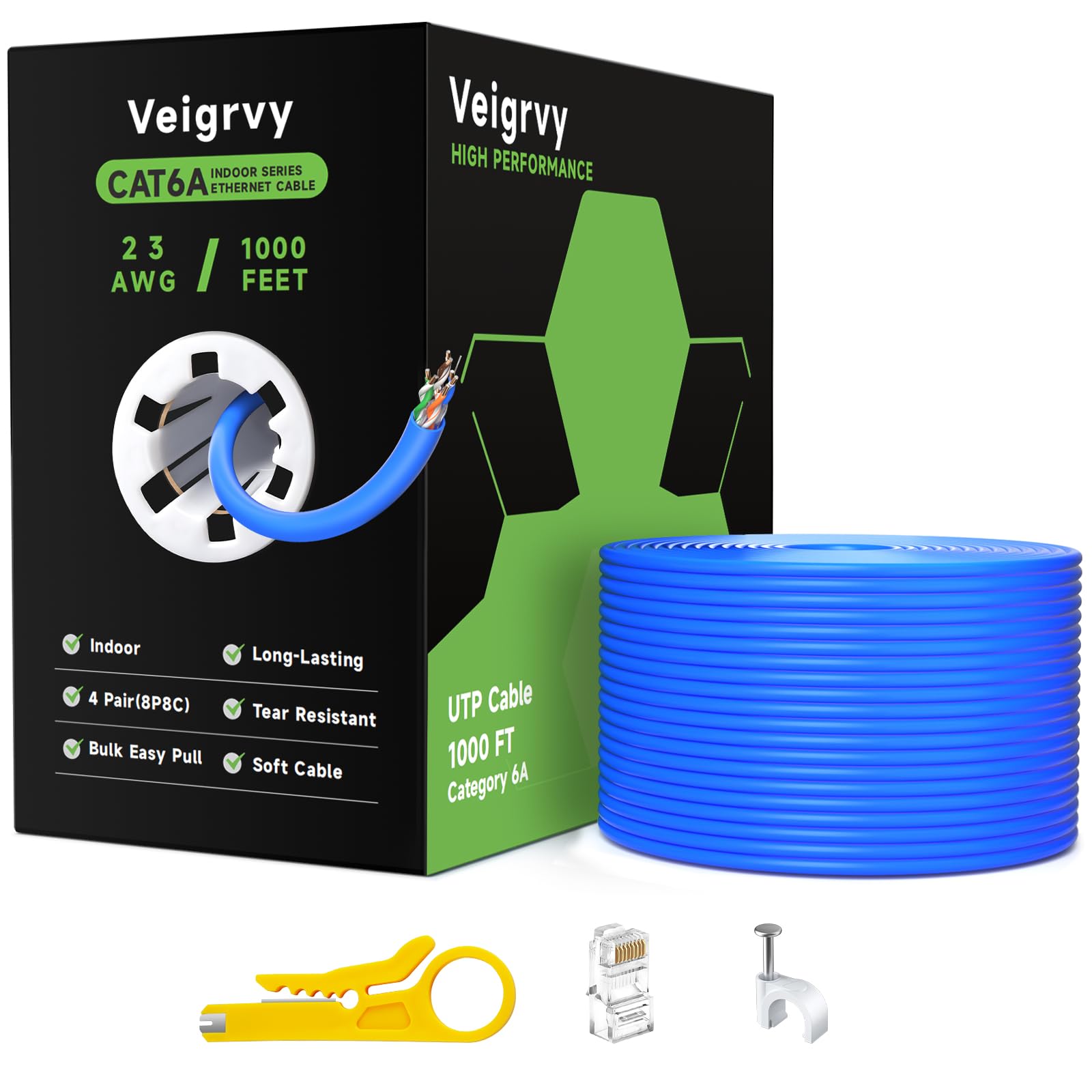
Veigrvy Cat 6a Shielded Ethernet Cable
Cat 6a S/FTP · 10 Gbps at 100m · 500 MHz · High Interference Protection
- Category: Cat 6a (Augmented Category 6)
- Conductor Material: 100% Oxygen-Free Pure Copper
- Bandwidth Rating: 500 MHz
- Max Speed Rating: 10 Gbps across full 100 meters
- Shielding Type: S/FTP (Shielded Foiled Twisted Pair)
Cat 6a is the absolute sweet spot for long-term reliability and future-proofing. This Veigrvy cable supports full 10 Gbps speeds across an entire 100-meter (328-foot) run and features comprehensive aluminum foil pair shielding plus a braided outer shield. It provides absolute immunity against EMI and radio interference from electrical conduits, high-wattage power supplies, and audio gear.
- • Supports full 10 Gbps throughput across the entire 100-meter maximum run
- • Heavy-duty double shielding completely repels electrical interference
- • 50-micron gold-plated RJ45 pins guarantee corrosion-resistant contacts
- • Durable braided outer jacket protects against pinching and pet chewing
- • Stiffer and slightly thicker than standard UTP patch cables
- • Slightly higher cost per foot than standard Cat 6
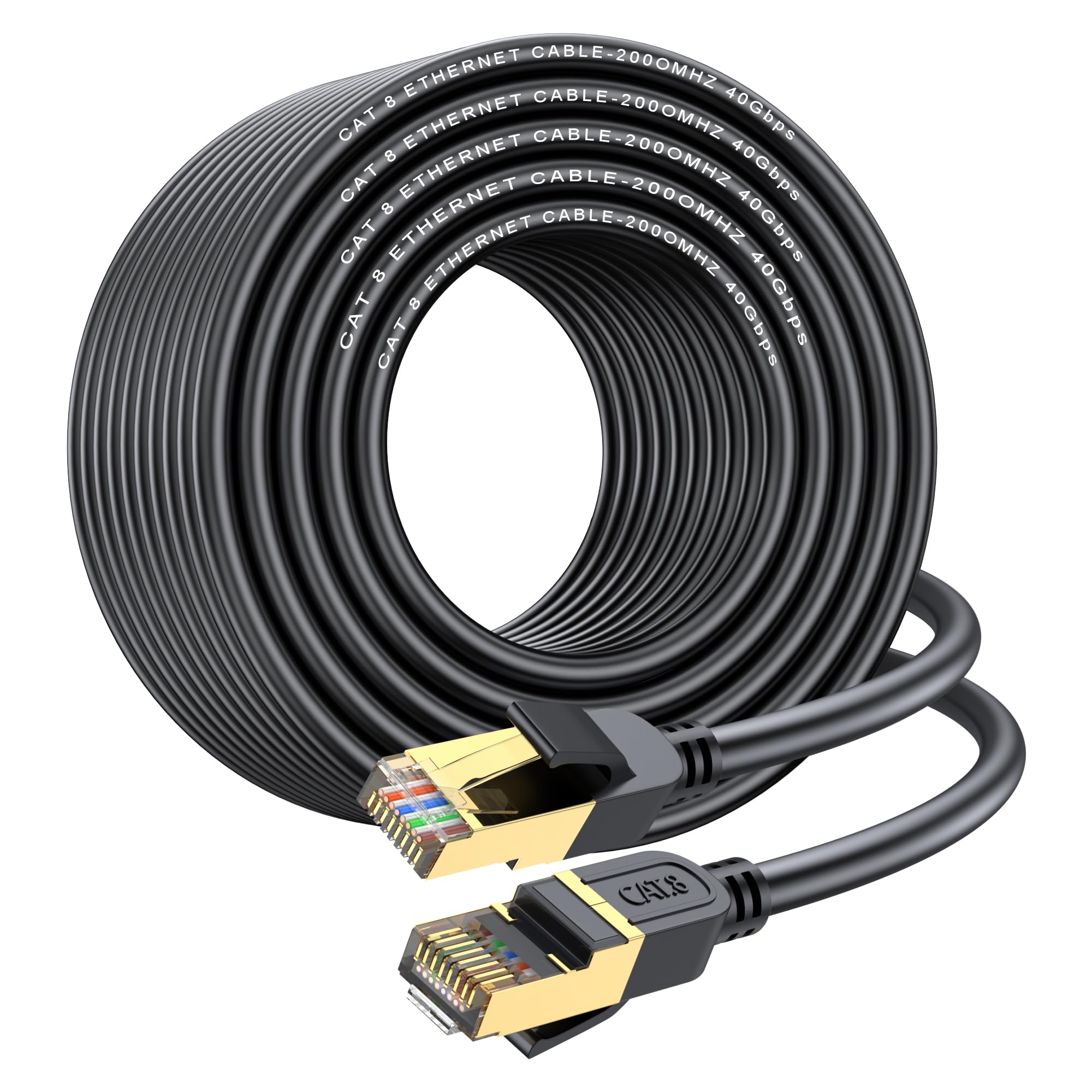
Deegotech Cat 8 Ethernet Cable
Cat 8 S/FTP · 40 Gbps / 2000 MHz · Double Shielded · Nylon Braided
- Category: Cat 8 (Class I / 2000 MHz)
- Conductor Material: 26 AWG Oxygen-Free Copper
- Bandwidth Rating: 2,000 MHz (4x Cat 6a)
- Max Speed Rating: Up to 40 Gbps (up to 30 meters)
- Shielding Type: Dual Shielded S/FTP with Ground Wire
While 40 Gbps bandwidth is massive overkill for a standard 1 Gbps internet connection, the Deegotech Cat 8 cable offers unmatched physical armor and shielding. With individual foil shielding around each pair, an overall braided shield, and a rugged nylon braided exterior, it is virtually impervious to electrical noise, crushing, and bending stress in high-density rack enclosures.
- • Extreme 2,000 MHz bandwidth headroom guarantees zero cable-related bottlenecking
- • Nylon braided jacket resists abrasions, tight bends, and pet damage
- • Heavy-duty gold-plated metal shielding on connector housings
- • 100% backwards compatible with Cat 5e, Cat 6, and Cat 6a hardware
- • Zero speed advantage over Cat 6 on a standard 1 Gbps internet plan
- • Thicker cable profile makes it harder to fit through tight cable staples
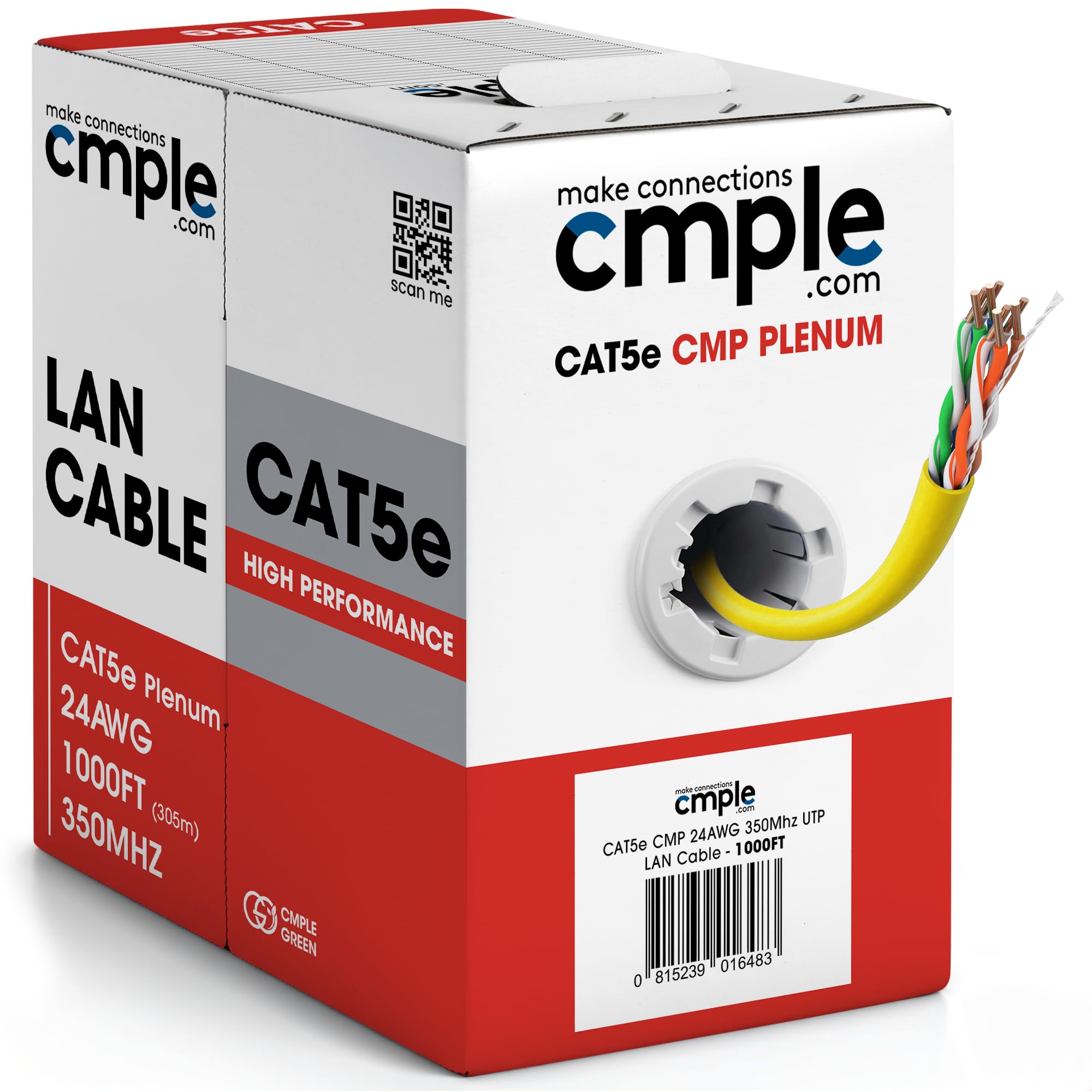
C&E Cat 5e Snagless Ethernet Cable
Cat 5e UTP · 1 Gbps Capable · 350 MHz · Gold Plated Contacts
- Category: Cat 5e (Enhanced Category 5)
- Conductor Material: Stranded Copper Wire
- Bandwidth Rating: 350 MHz
- Max Speed Rating: 1 Gbps (up to 100 meters)
- Form Factor: Ultra-flexible, slim profile
Cat 5e is the minimum standard that officially supports 1 Gbps Ethernet. For short connections (3 to 10 feet) between a modem and router or from a desktop switch to an office printer, this C&E cable delivers full gigabit speeds at rock-bottom prices. Its thin, ultra-flexible jacket is remarkably easy to tuck inside cable management channels.
- • Extremely affordable price point for multi-packs
- • Thin and flexible profile makes routing in cramped spaces effortless
- • Delivers full 948 Mbps gigabit speeds on short patch cable runs
- • Snagless molded boot prevents connector tab breakage
- • No internal spline; more vulnerable to crosstalk over long runs
- • Cannot support 10 Gbps speeds for future network upgrades
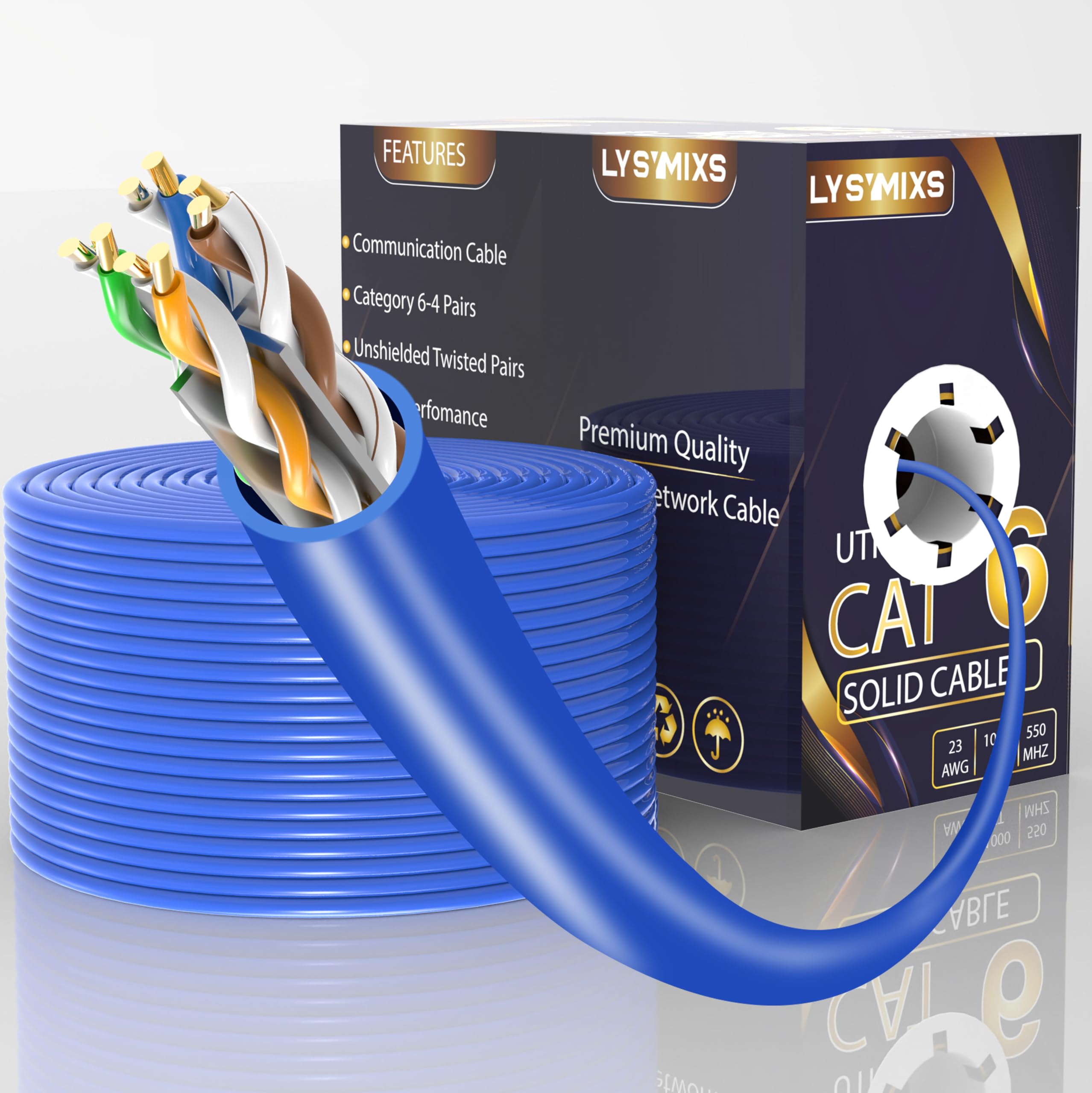
Lysymixs Cat 6 Solid Copper 1000FT Spool
Cat 6 Bulk Cable · Solid 23 AWG Bare Copper · CMR In-Wall Riser Rated
- Category: Cat 6 Bulk Solid Conductor
- Conductor Material: 23 AWG Solid Bare Copper
- Safety Rating: CMR (Riser Rated for in-wall installation)
- Length: 1,000 Feet (305 Meters) in Pull Box
- Spline: Center PE Spline Separator
If you are running Ethernet through attic spaces, crawlspaces, or punching down into keystone jacks and patch panels across multiple rooms, buying pre-terminated patch cords is impractical. This 1,000-foot spool of Lysymixs Cat 6 cable uses solid 23 AWG pure copper conductors and carries a CMR fire rating for safe in-wall residential installation.
- • Solid copper conductors punch down cleanly into RJ45 keystone jacks and patch panels
- • CMR riser-rated fire safety jacket approved for in-wall residential runs
- • Tangle-free easy-pull dispenser box with foot-marked cable jacket
- • The most economical way to hardwire an entire home for gigabit backhauls
- • Requires crimping tools, RJ45 modular plugs, or punchdown keystones
- • Solid core wire is stiffer and not meant for repeated flexing as a patch cord
Speed & Bandwidth Ceiling by Ethernet Category
The chart below demonstrates maximum rated bandwidth and real-world throughput capabilities across Ethernet standards over typical residential run distances:
Maximum Data Throughput by Cable Category:
How to Verify Your Cable Is Negotiating Full Gigabit Speeds
Once you connect your new Ethernet cable, follow these diagnostic steps to confirm your operating system has negotiated a full gigabit link:
- Check Windows Link Speed: Open Settings > Network & Internet > Ethernet. Look for "Link speed (Receive/Transmit)". It MUST read 1000/1000 (Mbps) or 2500/2500 (Mbps). If it reads 100/100 (Mbps), your cable is damaged or plugged into an outdated Fast Ethernet port.
- Check macOS Network Utility: On a Mac, hold the Option key and click the Apple icon > System Information > Network > Ethernet. Verify that "Link Speed" reports 1 Gbps or higher with Full Duplex.
- Avoid Tight 90-Degree Bends: When stapling or routing Ethernet along baseboards, never bend the cable tighter than a 1-inch radius (the diameter of a quarter). Severe kinks deform the internal pair twist rates, causing impedance spikes.
- Pair with a Gigabit-Ready Modem and Router: A certified Cat6 cable will still max out at 100 Mbps if connected to an outdated gateway. Ensure your equipment matches our top-tested recommendations in our best router for gigabit internet and best modem for Xfinity gigabit guides.
Check Your Real Download Speeds
Once your wired Ethernet link is confirmed at full gigabit, calculate how quickly large games and media files download using our free calculator.
Calculate Download Times