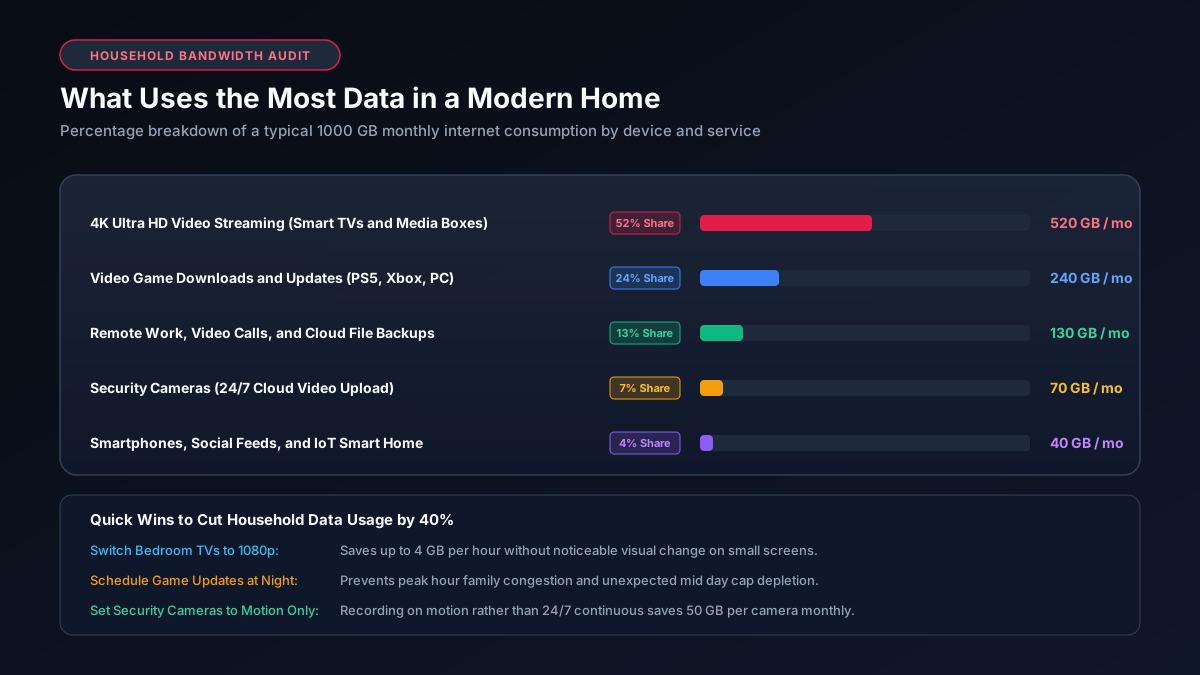
Data Usage at Home, Ranked From Highest to Lowest Impact
| Rank | Category | Typical Impact |
|---|---|---|
| 1 | 4K video streaming | 7 GB or more per hour, per stream |
| 2 | Large game downloads and updates | 50 to 150GB per download, occasional but massive |
| 3 | Cloud gaming | 3 to 15GB per hour |
| 4 | HD video calls | 0.5 to 2.4GB per hour |
| 5 | Cloud photo and video backup | 10s of GB per month per person, often running silently |
| 6 | Social media video (TikTok, Reels, Shorts) | Roughly 1GB per hour of active use |
| 7 | Security cameras | 1 to 16GB per month per camera, depending on settings |
| 8 | Smart home devices and software updates | A few GB per month, spread across many small devices |
1. 4K Video Streaming
A single hour of 4K streaming on Netflix, YouTube, or Disney+ uses around 7GB or more, depending on the platform and scene complexity. A household with two people streaming 4K on separate screens for a couple of hours each evening can use 400GB or more from streaming alone over the course of a month. See our full data usage comparison across streaming apps for exact per-hour figures by service.
2. Large Game Downloads and Updates
Individually, this is the single biggest spike a household ever sees. Modern AAA games routinely run 50 to 150GB, and seasonal updates for live service titles can add another 10 to 50GB at a time. A family with one or two active gamers can easily use more data from a single big update than from a week of typical streaming.
3. Cloud Gaming
Services like Xbox Cloud Gaming and GeForce NOW stream the entire game to your screen as live video, which makes them behave like high bitrate video streaming rather than traditional online gaming. Expect 3 to 15GB per hour depending on resolution, meaning a couple of hours of cloud gaming can rival a 4K movie night in total data used.
4. HD Video Calls
Zoom, FaceTime, and similar apps use noticeably more data in group calls with HD enabled than in simple one-on-one audio-only calls. A household with a remote worker taking several HD calls a day can add tens of gigabytes a month, though this is modest compared to streaming.
5. Cloud Photo and Video Backup
This is one of the most overlooked categories because it runs silently in the background. Phones set to automatically back up photos and videos in full resolution can use tens of gigabytes a month per person, especially in a household where everyone takes a lot of photos and video.
6. Social Media Video
TikTok, Instagram Reels, and YouTube Shorts are built around continuous autoplay video, which makes them heavier than most people expect. An hour of typical TikTok scrolling uses close to 1GB, and this adds up quickly across multiple people in a household who each spend an hour or more a day on these apps.
7. Security Cameras
A single camera set to event-based recording typically uses 1 to 4GB a month. Switching to continuous recording, or running several cameras at once, can push a household's camera-related data use to 8 to 16GB per camera per month, which becomes significant with three or four cameras running continuously.
8. Smart Home Devices and Software Updates
Individually tiny, but a household with a dozen or more connected devices, smart speakers, thermostats, light bulbs, and app-connected appliances, adds a small but constant background load from firmware checks, app syncing, and periodic updates.
What This Means for Managing Your Household's Data
If your usage looks higher than expected, start with the top of this list, not the bottom. Dropping one 4K stream to HD saves more data instantly than turning off every smart light bulb in the house combined. See our guide to reducing streaming data usage for the specific settings changes that make the biggest difference, and our guide to checking your actual usage on your router if you want to confirm which category is the real driver in your own home rather than relying on general averages.
Frequently Asked Questions
What uses the most data at home?
4K video streaming and large game downloads are the two biggest drivers in most households, followed by cloud gaming and HD video calls.
Do smart home devices use a lot of data?
Individually, very little. A dozen or more devices combined still typically use only a few gigabytes a month, far less than a single evening of 4K streaming.
Does cloud photo backup use a meaningful amount of data?
Yes, more than most people expect, since it runs continuously in the background rather than during active use. Tens of gigabytes a month per person is common for full resolution backups.
Is social media video a big data user?
Yes, more than most people assume. TikTok's default autoplay video uses close to 1GB per hour, comparable to a lower quality video stream, not a typical "just scrolling" activity.
What is the fastest way to reduce data usage at home?
Lowering streaming resolution from 4K to HD has the single biggest impact of any single change, since it can cut that category's usage by 60 to 75 percent with a modest quality trade-off.