The Core Difference
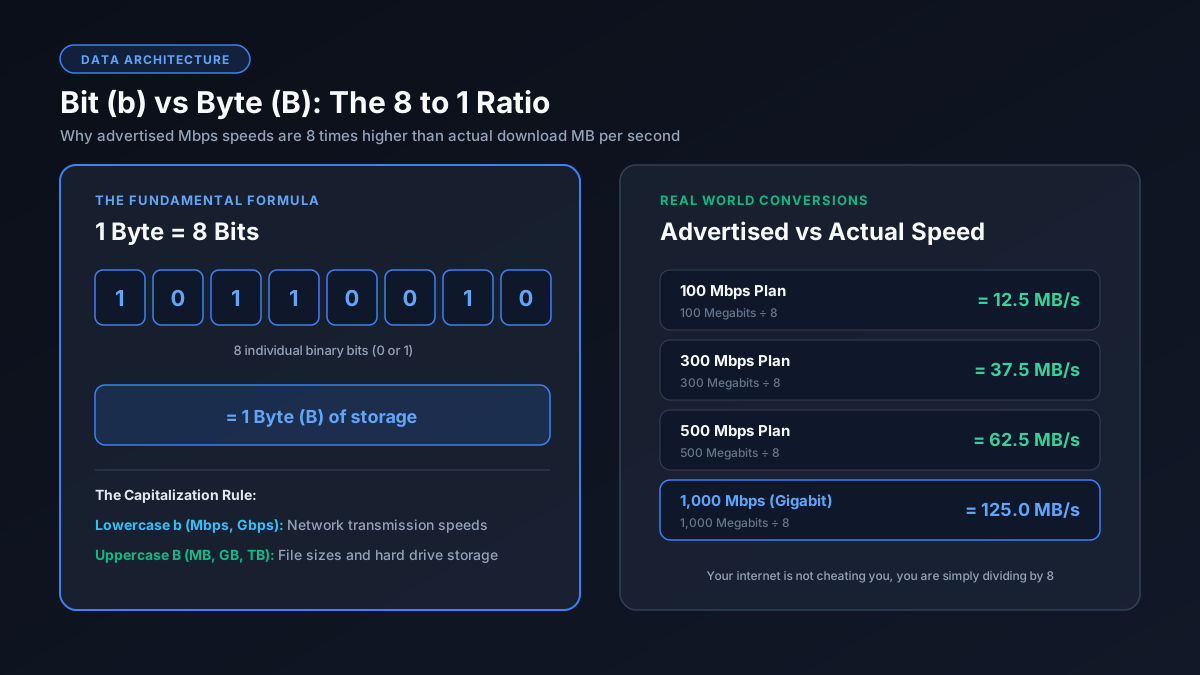
A bit is the smallest unit of digital data. It can only be a 0 or a 1. A byte is a collection of 8 bits. That is the essential rule: 8 bits = 1 byte. This single conversion factor explains almost every confusing speed number in modern computing.
Why This Matters for Internet Speed
Internet service providers advertise network bandwidth in Mbps, which stands for Megabits per second. However, web browsers, Steam, and file download managers display transfer rates in MB/s, meaning Megabytes per second. Because 1 byte equals 8 bits, your speed in MB/s will always look 8 times smaller than your speed in Mbps.
For example, a 100 Mbps connection divided by 8 yields an actual download throughput of 12.5 MB/s. Your connection is performing as promised; you are simply viewing the data in bytes instead of bits.
Bits vs Bytes at a Glance
- Bits (lowercase 'b'): Used for data transmission and network speeds like Kbps, Mbps, and Gbps.
- Bytes (uppercase 'B'): Used for storage space and file sizes like KB, MB, GB, and TB.
The Metric and Binary Prefixes
Both bits and bytes use similar prefixes, which adds to the confusion:
- Kilo = 1,000 (or 1,024 in binary computing)
- Mega = 1,000,000
- Giga = 1,000,000,000
- Tera = 1,000,000,000,000
One Megabit equals 1,000,000 bits, while one Megabyte equals 8,000,000 bits. They remain exactly 8 times apart across every tier.