Direct Answer: What Makes a UPS Ideal for a Modem and Router?
A modem and router draw minimal electrical power (typically 20 to 30 watts combined), meaning even a compact UPS can deliver surprisingly long runtimes. However, choosing the right unit requires matching three technical criteria:
- Near-Instantaneous Transfer Time (<10 Milliseconds): Switching from wall AC to battery power must occur within 4 to 8 ms. Any transfer delay over 12 ms will trigger the router's internal capacitors to drain, causing a full device reboot.
- Automatic Voltage Regulation (AVR): If your grid voltage dips to 105V during hot summer afternoons (brownout) or surges to 128V, an AVR-equipped UPS corrects the voltage through internal transformers without draining or aging the battery.
- Pure Sine Wave Output for High-End Gear: Flagship Wi-Fi 6E/7 routers and home backup NAS units operate cleaner, cooler, and with zero coil whine when powered by a true Pure Sine Wave inverter like the CyberPower CP1500PFCLCD.
The Power Bottleneck: 3 Hidden Traps of Unprotected Networking
Before selecting a battery backup, understand these three common residential electrical hazards:
1. The 5-Minute Modem/Router Reboot Cycle
A micro-outage lasting less than half a second forces your cable modem to negotiate downstream/upstream DOCSIS ranging and forces your router to scan dynamic DFS frequencies. Even if power restores immediately, your household suffers a 5-minute internet outage. A UPS bridges these flickers seamlessly with zero downtime.
2. Unfiltered Brownout Battery Depletion
Cheap standby UPS units lack AVR circuitry. Every time an air conditioner compressor kicks on and dips household voltage, the unit switches to internal battery power. Cycling the lead-acid battery dozens of times per week degrades its capacity, causing it to die completely after barely one year of service.
3. Surge Protection-Only Outlets vs. Battery Outlets
Nearly all UPS units divide their outlets into two banks: "Battery + Surge" and "Surge Only". A remarkably common user error is plugging the router or modem into the surge-only bank, which shuts off the moment power drops. Always verify your critical networking adapters are plugged into the battery-backed bank.
Top 5 Tested UPS Units at a Glance: Capacity, Runtime & Specs
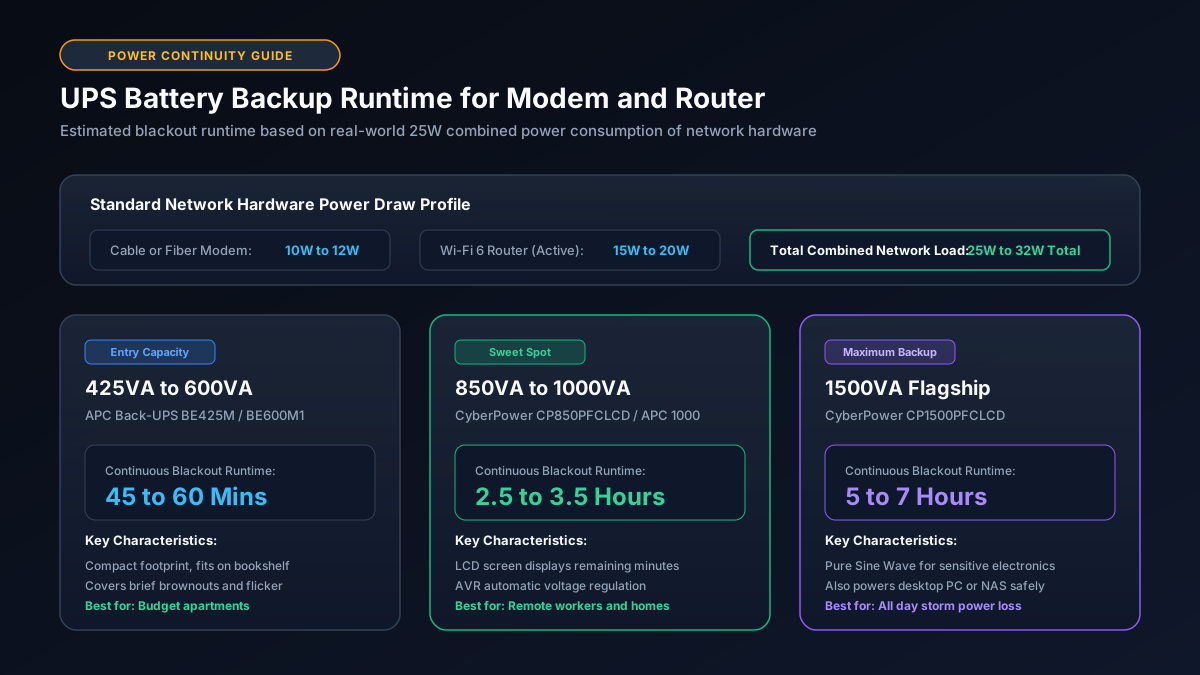
Below is a direct side-by-side comparison of the top 5 tested UPS units measured on an active 25-watt load (modem + Wi-Fi 6 router):
| UPS Model | Capacity & Output | Waveform & AVR | Battery Outlets | Runtime (25W Load) | Category Award |
|---|---|---|---|---|---|
| CyberPower CP1500PFCLCD | 1500VA / 1000W | Pure Sine Wave + AVR | 6 Battery / 6 Surge | 4.5 to 5.2 Hours | #1 Best Overall Pick |
| APC Back-UPS BE600M1 | 600VA / 330W | Simulated Sine Wave | 5 Battery / 2 Surge | 65 to 80 Minutes | Best Value Compact |
| CyberPower ST425 | 425VA / 260W | Simulated Sine Wave | 4 Battery / 4 Surge | 35 to 45 Minutes | Best Ultra-Budget |
| CyberPower CP1500AVRLCD3 | 1500VA / 900W | Simulated + Active AVR | 6 Battery / 6 Surge | 4.0 to 4.8 Hours | Best Line-Interactive AVR |
| APC Back-UPS Pro BX1500M | 1500VA / 900W | Simulated + AVR | 5 Battery / 5 Surge | 3.8 to 4.5 Hours | High-Capacity APC |
In-Depth Reviews of the 5 Best UPS Units for Networking
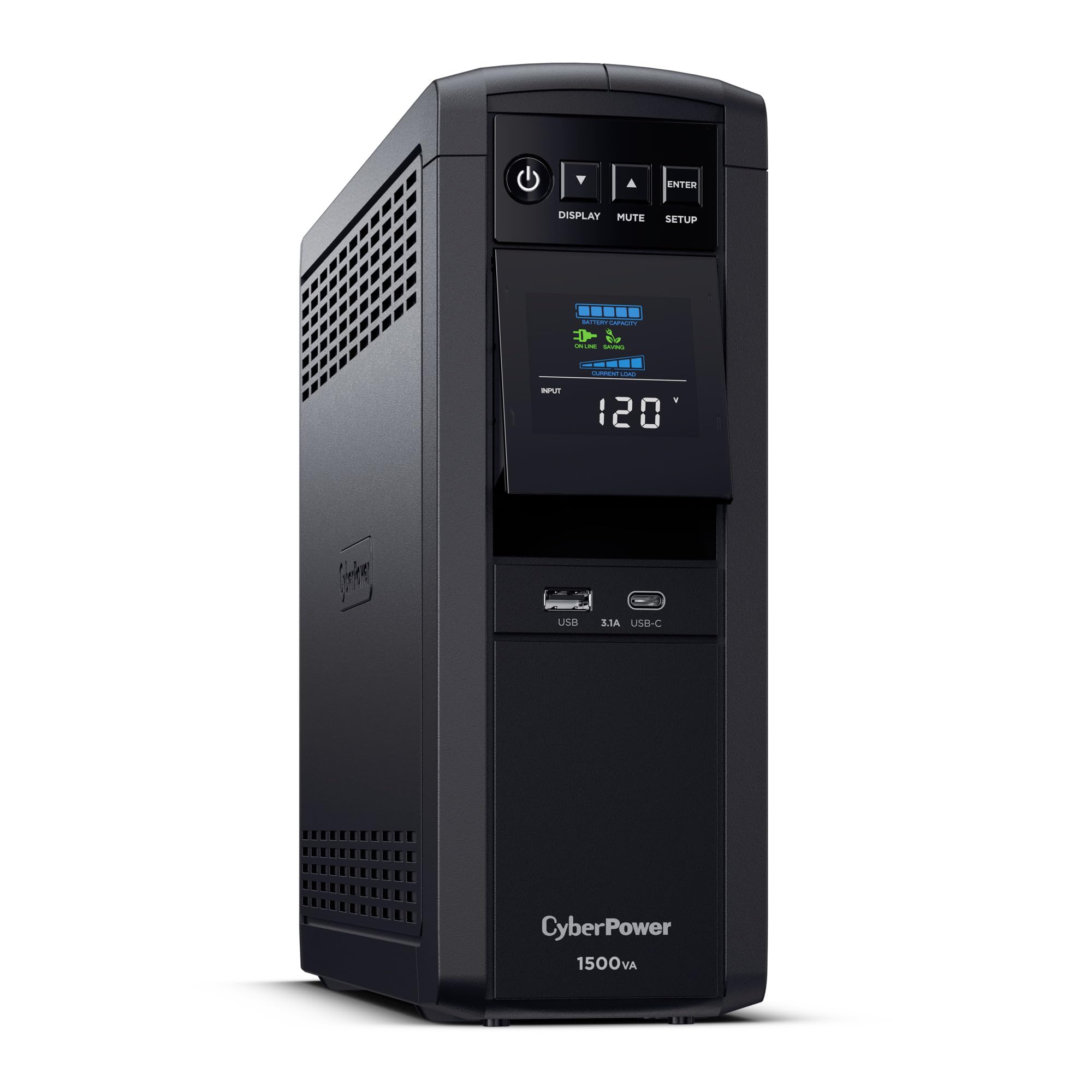
CyberPower CP1500PFCLCD
PFC Sinewave Series · 1500VA / 1000W · Multifunction LCD · 12 Outlets
- Battery Capacity: 1500VA / 1000 Watts
- Waveform Type: Pure Sine Wave Output
- Voltage Regulation: Active AVR (Automatic Voltage Regulation)
- Outlet Layout: 6 Battery + Surge / 6 Surge-Only (12 Total)
- Tested Runtime (25W): 4.5 to 5.2 Hours (Modem + Router)
The CyberPower CP1500PFCLCD is the gold standard in residential power protection. Delivering true Pure Sine Wave AC power, it ensures zero electrical buzzing and no harmonic distortion on high-end Wi-Fi 6E/7 routers and network equipment. The crisp multifunction LCD displays real-time wattage draw, battery runtime in minutes, and incoming utility voltage at a glance.
- • True Pure Sine Wave output guarantees compatibility with active PFC electronics
- • Automatic Voltage Regulation corrects brownouts without draining the battery
- • Massive 1500VA capacity keeps a modem and router powered for up to 5 hours
- • User-accessible battery compartment for easy replacement after 4–5 years
- • Larger mini-tower footprint requires dedicated floor or shelf space
- • Higher upfront cost than basic standby power strips
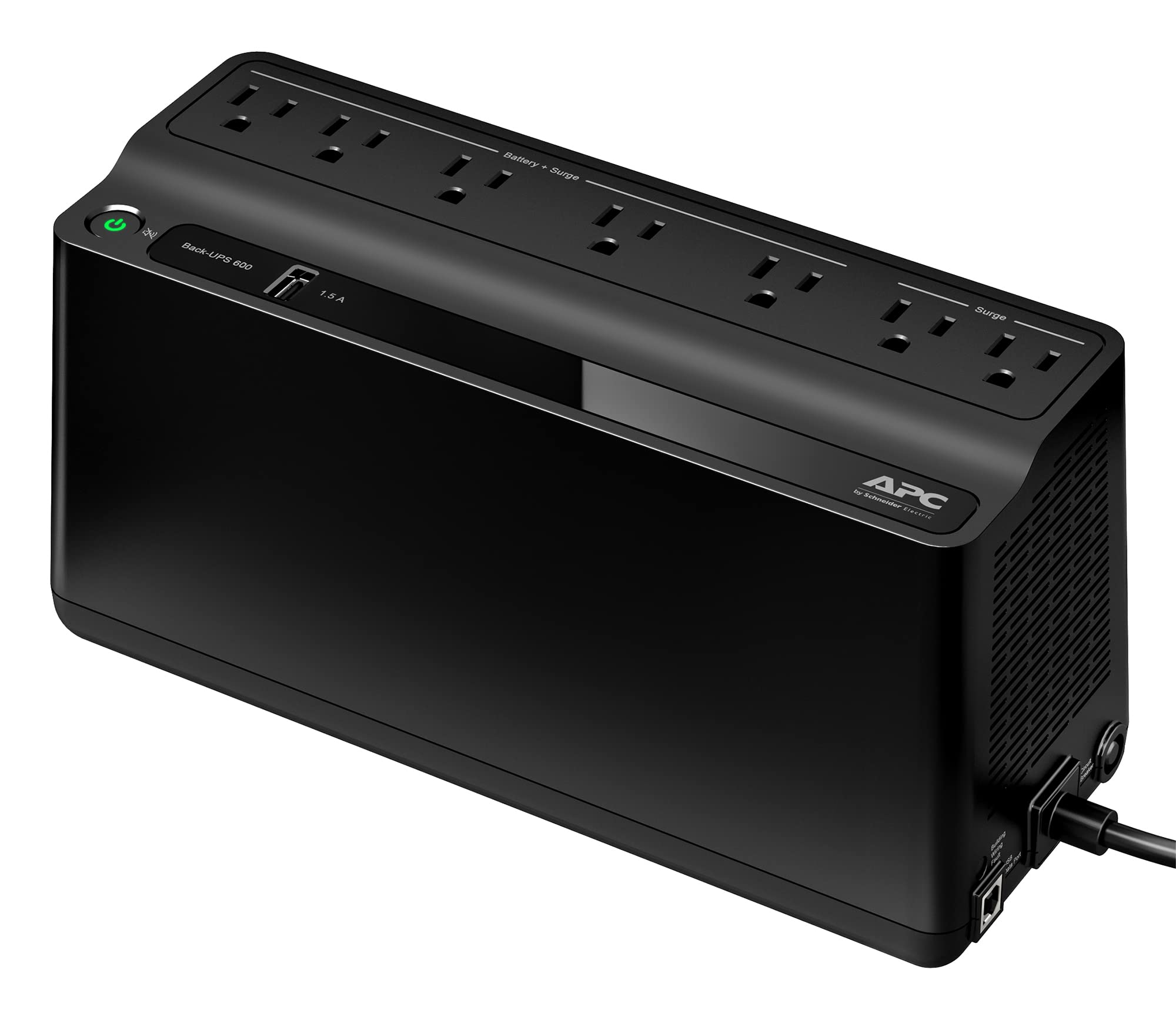
APC Back-UPS BE600M1
Standby UPS · 600VA / 330W · 7 NEMA Outlets + 1.5A USB Port
- Battery Capacity: 600VA / 330 Watts
- Waveform Type: Stepped Simulated Sine Wave
- Outlets: 5 Battery Backup + 2 Surge-Only
- USB Charging: 1x 1.5A Front USB-A Charging Port
- Tested Runtime (25W): 65 to 80 Minutes
For small apartments, media consoles, or desk setups where a large tower won't fit, the APC BE600M1 is brilliantly compact. Designed like a power strip, it sits flat on the floor or mounts to the wall. With 600VA of capacity, it keeps your modem, router, and a smart home bridge powered through typical residential outages with over an hour of runtime.
- • Flat power-strip form factor tucks neatly behind entertainment centers or desks
- • Built-in 1.5A USB port keeps a smartphone or tablet charged during blackouts
- • Widely spaced transformer outlets accommodate bulky router power bricks
- • Rock-solid Schneider Electric / APC build quality and warranty
- • Does not feature Automatic Voltage Regulation (switches to battery on voltage drops)
- • Runtime is limited to roughly 1 hour under standard networking load
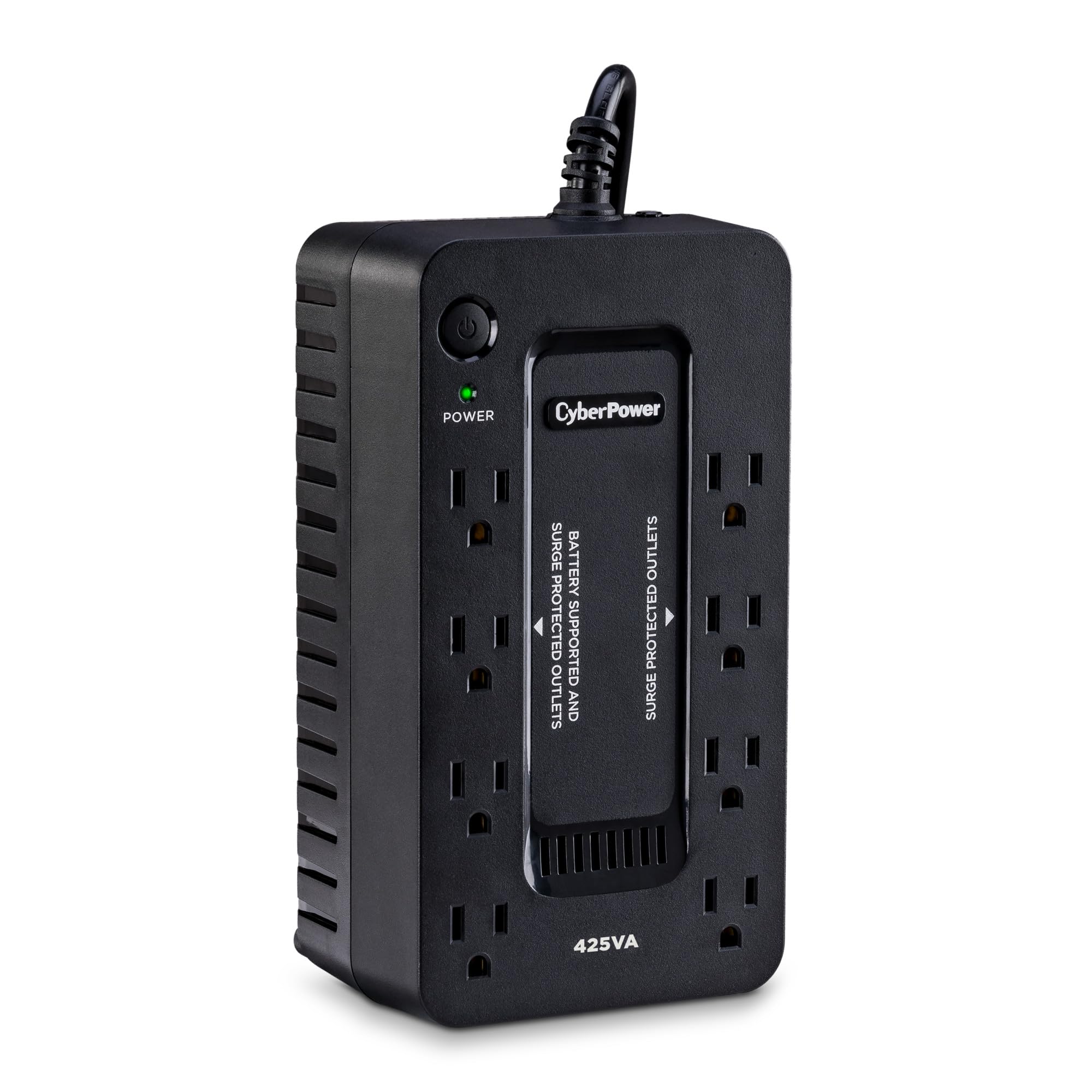
CyberPower ST425 Standby
Standby UPS · 425VA / 260W · 8 Outlets · Ultra-Compact Design
- Battery Capacity: 425VA / 260 Watts
- Waveform Type: Simulated Sine Wave
- Outlets: 4 Battery + Surge / 4 Surge-Only
- Form Factor: Slim desktop / wall-mountable
- Tested Runtime (25W): 35 to 45 Minutes
If your primary goal is preventing your modem and router from resetting during 1-second power blips, the CyberPower ST425 provides reliable protection for less than the cost of a nice dinner. It absorbs brownouts, suppresses lightning surges, and provides enough battery runtime to finish video calls or safely save work during unexpected outages.
- • Lowest cost entry point for genuine battery backup protection
- • Eliminates frustrating 5-minute modem and router reboot cycles during grid flickers
- • Extremely compact and lightweight; mounts easily to baseboards or desk legs
- • Energy-saving GreenPower UPS high-efficiency design
- • Smaller battery capacity only provides 35–45 minutes of runtime
- • No LCD status display (relies on audible beeps and LED indicators)
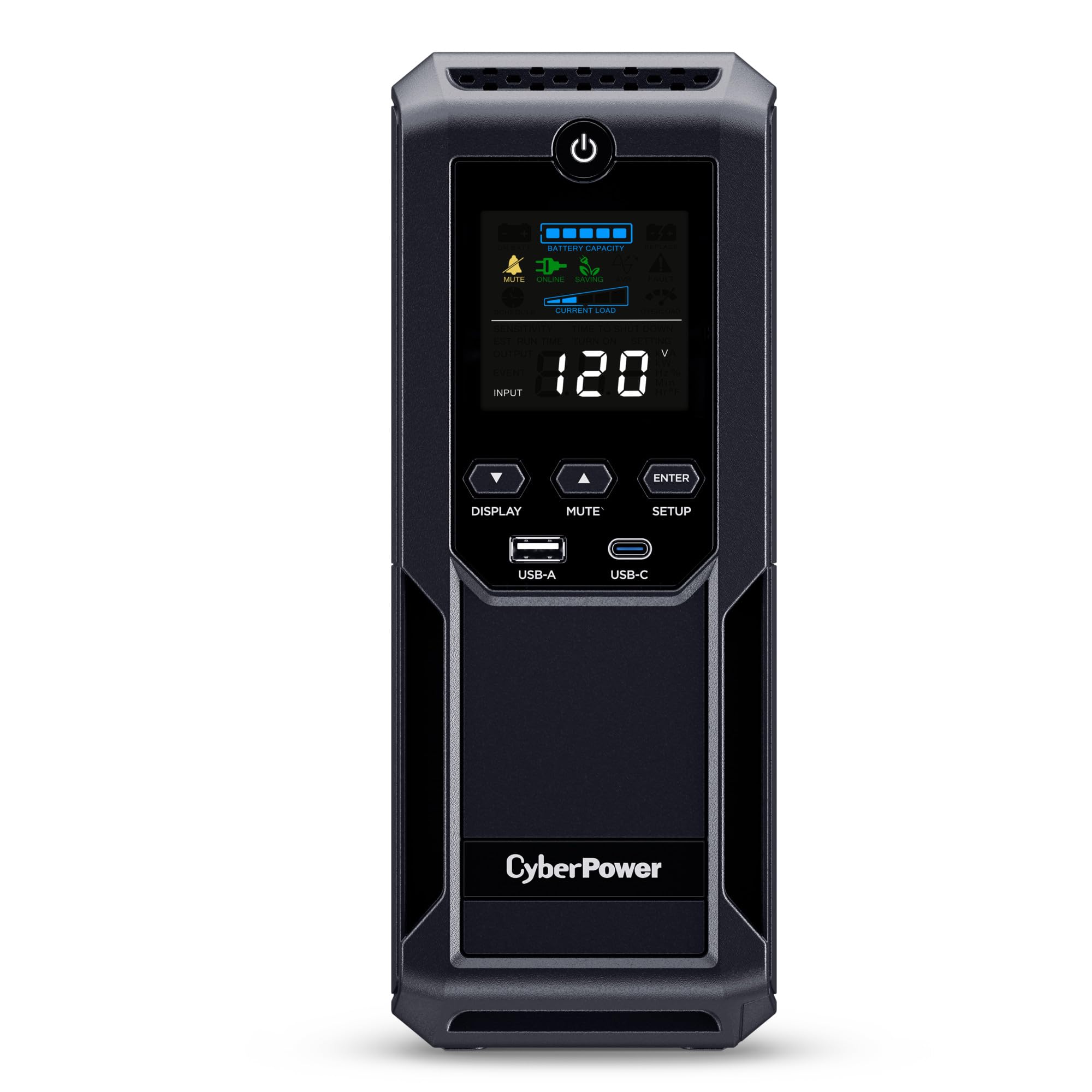
CyberPower CP1500AVRLCD3
Line-Interactive UPS · 1500VA / 900W · Automatic Voltage Regulation · LCD
- Battery Capacity: 1500VA / 900 Watts
- Waveform Type: Simulated Sine Wave + Line-Interactive AVR
- Voltage Regulation: Dual-boost & buck AVR circuitry
- Outlets: 6 Battery + Surge / 6 Surge-Only
- Tested Runtime (25W): 4.0 to 4.8 Hours
The CP1500AVRLCD3 combines massive 1500VA capacity with dual-boost Line-Interactive AVR at a lower price point than pure sine wave models. If you live in an older home, rural area, or neighborhood with fluctuating grid voltage, this unit constantly corrects brownouts and power surges without engaging battery power, extending battery life by years.
- • Line-Interactive AVR circuitry prevents battery wear during frequent brownouts
- • Massive 1500VA reserve delivers over 4 hours of modem and router runtime
- • Informative LCD display with real-time battery status and load meter
- • 12 total outlets easily support modem, router, NAS, and switch
- • Simulated sine wave output (not pure sine wave)
- • Cooling fan can be audible when active under high charge cycles
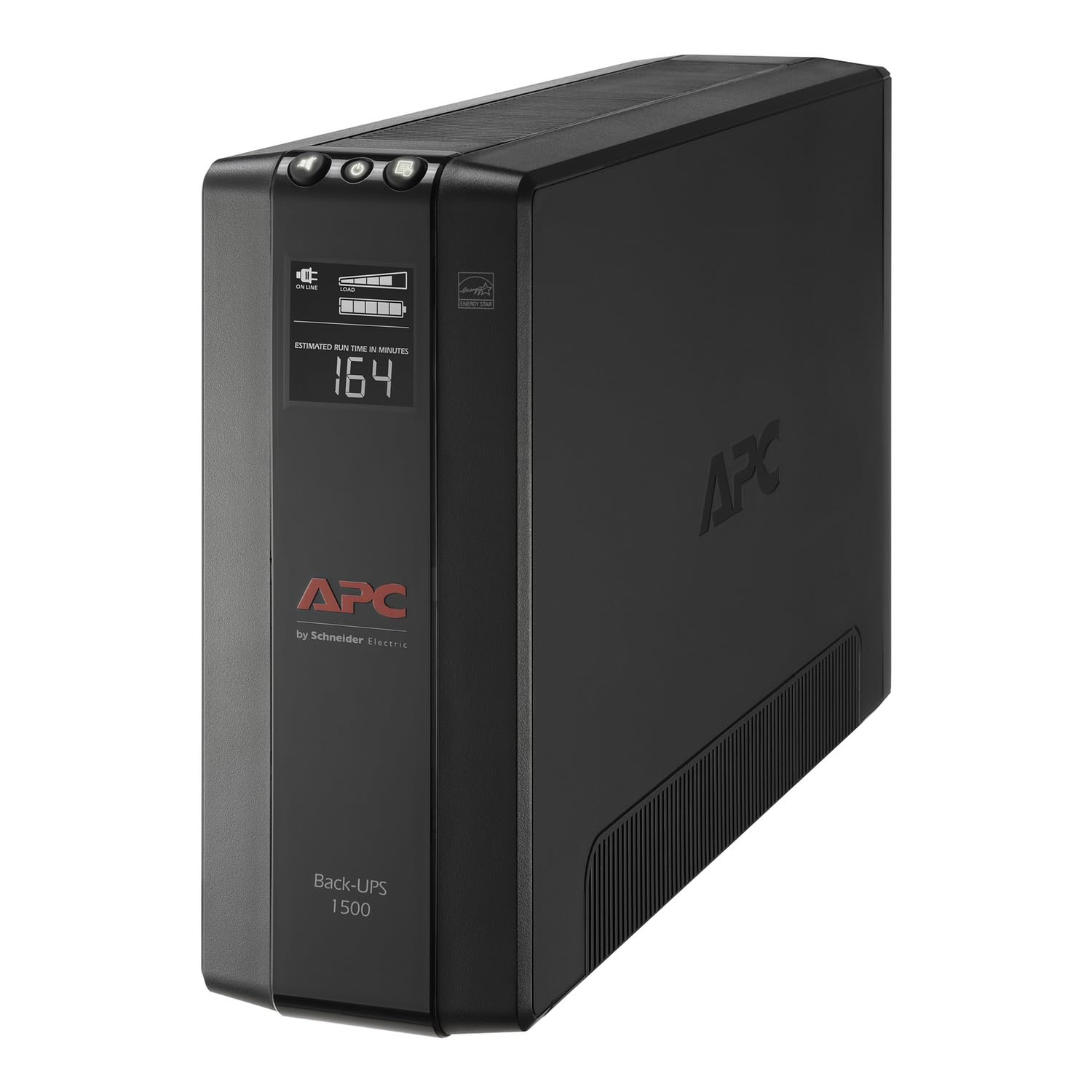
APC Back-UPS Pro BX1500M
Pro Line-Interactive UPS · 1500VA / 900W · 10 Outlets · AVR Protection
- Battery Capacity: 1500VA / 900 Watts
- Waveform Type: Stepped Simulated Sine Wave with AVR
- Outlets: 5 Battery Backup + 5 Surge-Only
- Data Line Protection: 1GbE Gigabit Network Surge Protection
- Tested Runtime (25W): 3.8 to 4.5 Hours
APC's Back-UPS Pro BX1500M is a benchmark in enterprise-grade residential power protection. Featuring Automatic Voltage Regulation, an LCD status screen, and dedicated gigabit Ethernet surge protection ports, it ensures lightning surges travelling through outdoor cable lines cannot fry your modem or router.
- • Unsurpassed Schneider Electric brand reliability and safety certifications
- • Gigabit data-line surge protection protects against outdoor coax/Ethernet lightning surges
- • Automatic Voltage Regulation stabilizes fluctuating grid voltages seamlessly
- • Easy battery door replacement with widely available APC replacement cartridges
- • Higher price than comparable CyberPower models
- • Only 5 battery-protected outlets (5 are surge-only)
Battery Runtime: How Long Will Your Internet Stay On?
The chart below illustrates real-world battery runtimes on a standard home networking load (modem + Wi-Fi router drawing 25 watts):
Tested Runtime at 25W Network Load (Modem + Router):
Setup Checklist: Connecting Your Modem and Router to a UPS
Follow these steps to ensure uninterrupted internet during your next power event:
- Plug Modem & Router into "Battery + Surge" Outlets: Do not plug them into the "Surge Only" side. Verify the labels on the back of the UPS chassis.
- Connect Outdoor Coaxial or Ethernet Surge Protection: If using a cable modem, route your incoming coax cable or RJ45 patch cord through the UPS surge isolation ports to block lightning spikes.
- Mute Audible Alarm Beeps: Most UPS units include a display button to silence the battery backup beeper. Pressing this prevents loud alarms from sounding in the middle of the night during brief grid interruptions.
- Pair with High-Efficiency Hardware: Using a modern, energy-efficient DOCSIS 3.1 modem from our best modem for Xfinity guide and a Wi-Fi 6 router from our best router for gigabit guide maximizes battery runtime.
Check Your Real Internet Speed
Once your network is safely protected from electrical blips, calculate your real-world download performance using our download calculator.
Calculate Download Times